
Have you ever wondered why so many entrepreneurs get stuck with delays, rejections, or just unneeded complications during company registration, even when everything looks correct on paper? Is it because some document is missing, filings are off by a detail, or maybe because there’s a misunderstanding about the legal business registration rules in India? Starting a business should feel energising, but somehow the path becomes tangled fast, especially when there is no real support. Uniqfiling sort of helps make documents required for legal business registration easier for startups and other business owners, so each part is handled with care and accuracy. Still, even small slips can cause big setbacks. In this blog, we’ll go through the most common mistakes people run into during the documents required for company registration, what to do to avoid them, and what you should keep in mind before you begin.
Business Registration Process
The business registration process is like the first and most important stride toward building a legally recognised company. Plenty of entrepreneurs rush into company registration without getting the full picture of the structure, the compliance rules, or the paperwork requirements. And yeah, that usually ends in rejection or annoying delays, which is pretty common.
One of the biggest blunders is going with the wrong business structure, without really looking at long-term goals. A lot of founders keep trying to register a private limited company, but they do it while not fully grasping the compliance load, day-to-day operational responsibilities and the continuing legal obligations. Then things get kind of messy in the early stages of Private Limited Company Registration in Gurgaon, mainly because entrepreneurs may not realise the reporting rules, the taxation setup, and the governance requirements. Picking the right structure should never be only for quick convenience; it has to be tied to scalability, funding plans, and whether you’re ready for compliance, really ready.
Uniqfiling often sees that applicants just miss a few key legal steps in the business registration process, and later, this messes with approvals and overall compliance
Also Read Our Blog: Key Services Offered by Chartered Accountants Every Business Needs.
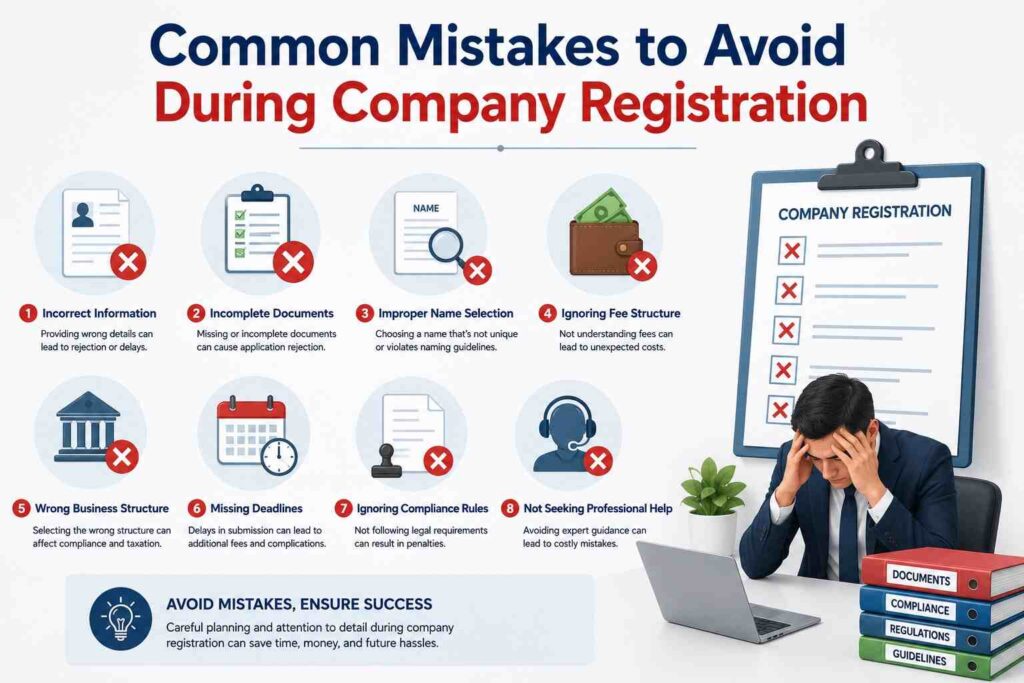
Common mistakes in the business registration process:
- Choosing the wrong company structure
- Not verifying the company name availability properly
- Ignoring compliance requirements under legal business registration
- Submitting incomplete or mismatched details
- Rushing through online filing without review
One other big mistake people make during company registration is basically ignoring what’s location-specific, like the legal procedures and the state-level compliance differences. A lot of entrepreneurs get the idea that registration rules are identical everywhere, but honestly, they’re not. In some jurisdictions, there can be extra verification steps, different address validation norms, or even heavier document scrutiny, depending on where you’re applying. Like, if a business is planning expansion in NCR, many of them just focus on Company registration in Gurgaon, but they sort of forget that local checks might kick in.
Avoiding Verification Delays
Things like office address verification, utility bill authentication, and jurisdictional approval timelines can end up being more strict or just more time-consuming than expected. And that lack of awareness, it can easily create unnecessary delays, sometimes even rejection of the applications. So if you understand regional compliance differences before you start documents required for company registration, things usually go smoother, and you reduce the chance of having to redo filings again.
Uniqfiling ensures that businesses avoid such mistakes by reviewing every stage of company registration carefully. A structured business registration process reduces rejection chances and speeds up approvals significantly.
Documents Required for Company Registration
One of the most overlooked sides of company registration is documentation, honestly it’s kind of a quiet part. A lot of applications get rejected simply because the paperwork for company registration is incomplete, or it is outdated, and sometimes it even feels inconsistent with the other files.
To ensure smooth processing, entrepreneurs must prepare all documents in advance before starting the company registration process.
Key documents required include:
- PAN card of directors and shareholders
- Aadhaar card or passport for identity verification
- Address proof (utility bill or bank statement)
- Passport-size photographs
- Registered office proof (rent agreement or ownership document)
- No Objection Certificate (if applicable)
Common documentation mistakes:
- Using outdated address proof
- Mismatched details across documents
- Missing digital signatures (DSC)
- Incorrectly formatted scanned copies
- Not verifying director’s details before submission
These errors often delay the company registration process and can even cause the application to get rejected by regulatory authorities. Understanding in detail what documents are required for legal business registration is essential for a smooth approval.
Uniqfiling helps applicants sort of double-check all their documents before submission, so it makes sure the legal and business registration needs are met, and also it lowers the mistakes that usually show up during filing.
Proper documentation really is the backbone of successful company registration, and even a little mismatch can end up causing long delays in approval, not fun at all.
Mistakes When You Register a Private Limited Company
When entrepreneurs decide to register a private limited company, they often assume it’s pretty easy, and the process is simple. But this is exactly where a bunch of critical mistakes show up during legal business registration, and it sort of slips past them before they realise it.
A private limited company structure requires careful planning, proper drafting of legal documents, and strict adherence to compliance norms.
Major mistakes include:
- Not defining business objectives clearly in the MOA
- Ignoring shareholder and director structure rules
- Delaying DSC and DIN registration
- Incorrect filing during incorporation
- Not understanding long-term compliance responsibilities
Many founders kind of underestimate the ongoing duties, like audits, annual filings, and those board meetings that pop up under legal business registration rules.
Uniqfiling often lends a hand to clients who try to register a private limited company but don’t really grasp these duties, so later there can be non-compliance problems.
Another common slip is not properly drafting the Memorandum and Articles of Association, which then directly affects the company registration approval process.
Important points to remember:
- Clearly define business activities before filing
- Ensure all directors meet eligibility criteria
- Verify name approval before proceeding
- Keep compliance obligations in mind from day one
Skipping these steps could end up in rejection or even legal complications later, after incorporation. With the right guidance while registering the company, long-term stability and compliance is more likely to stick, even if things feel a bit unstable at first.
Legal Compliance Issues in Company Registration
Even after a successful incorporation, a lot of businesses still run into legal business registration requirements, and it can feel a bit odd, like it should already be finished. Entrepreneurs often treat registration as a once-off matter, but in reality, it keeps going, like continuous adherence. Some obligations pop up over time, so it’s not just paperwork then done and settled.
Failure to meet legal obligations can lead to penalties and operational restrictions.
Common compliance mistakes:
- Not filing annual returns on time
- Ignoring statutory audit requirements
- Missing updates in company records
- Not maintaining proper financial documentation
- Overlooking regulatory deadlines
These issues usually pop up when businesses don’t really have awareness about what comes after registration, you know. With Uniqfiling, companies can stay aligned with all compliance requirements, and it also helps make sure the benefits from company registration are fully put to work, without creating any legal risks.
Another big problem is that the changes in the company structure are not updated, like directors or the registered office, which is actually mandatory under the legal business registration guidelines.
Proper compliance, well, it basically keeps the business running smoothly, and it helps shield the company from those legal complications that can pop up out of nowhere.
Conclusion
Making sure you avoid slip-ups during company registration is really key if you want a firm and legally compliant setup for your business base. From picking the right framework to putting together precise paperwork, each little phase matters a lot, so approvals go through without that much friction. Knowing how the business registration process works, and also checking that every document needed for legal business registration is in the right form, can spare you both time and energy.
It is also really important to carefully evaluate when you register a private limited company, because the compliance duties begin from the day of incorporation. Proper planning helps you avoid those unnecessary delays and legal complications later on, so it’s like you already map the risks before they pop up, in the future.
Uniqfiling plays a key role in guiding entrepreneurs through each stage of company registration, making sure it stays accurate and compliant with legal business registration standards. If you are planning your business journey, Contact Us in the middle of your planning stage so you can dodge errors and end up with a smooth registration experience, really.

